
When I was a kid, my dad would take my brother and I out to a park somewhere (maybe in Wisconsin?) to go “rock climbing.” Of course, this really wasn’t climbing up rocks, at least not in the sense that we were scaling the sides of cliffs with a bunch of equipment. No, really it was just hiking through the woods where there happened to be some big rocks to hike over as well. Nonetheless, I think these trips subtly instilled in me a love for hiking. And once I started traveling as an adult, I often tried to build in some sort of hiking experience, from a day hike in the hills around Bergen, Norway to a steep climb up Mount Sinai in Egypt.
At some point, I upped the ante and took on multi-day hikes (or, as I would call them, treks). And after trekking in three popular destinations around the world, I thought I would take a look at how similar and/or different the treks were.
Inca Trail vs. Grand Canyon vs. Himalayas
In 2009, I did the four-day Inca Trail trek to Machu Picchu. In fall 2013, I did a two-week trek in the Himalayas to Gokyo Ri; while this isn’t the classic Everest Base Camp route, it crosses through many of the same villages and is generally comparable. Finally, this spring, I did a four-day trek in the Grand Canyon from the north rim to the south rim (known as the “rim to rim”), one of the best known canyon treks. Here’s how they stack up:
Altitude
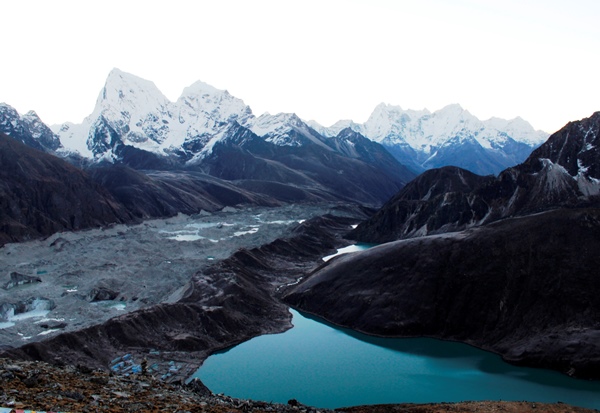
The Inca Trail was my first experience in high altitude (up to 4200 meters) and I found that pretty challenging. While I took Diamox to combat altitude sickness, I still struggled to breathe during the uphill portions of the trek. However, the Himalayas went even higher. While on the Inca Trail, we simply crossed a pass that was above 4000 meters, in the Himalayas, we spent several nights sleeping above 4000 meters and two night above 5000 meters. The Grand Canyon, on the other hand, didn’t present any altitude-related issues.
Level of difficulty
Each trek presented its own difficulties. I probably struggled with my breathing more on the Inca Trail than I did in the Himalayas, despite being at a much higher altitude than in Peru. The terrain was probably the easiest in the Grand Canyon and hardest in the Himalayas, with several stretches of large rock “staircases” to climb up or down. While the weather was the hottest in the Grand Canyon, it was more unpredictable in the Himalayas, with rain showers making the trek very difficult for a couple of days. Overall, I would say the Himalayas were the most difficult and the Grand Canyon the easiest (relatively speaking).

Accommodations
These can vary depending on what you are willing to spend, but in general the Inca Trail and the Grand Canyon were all about camping, while trekking in the Himalayas meant staying in rustic tea houses. However, I saw plenty of people camping in the Himalayas as well. If I had done a higher end rim-to-rim trek in the Grand Canyon, I could have stayed in a cabin at Phantom Ranch at the bottom of the canyon instead of camping, but that is the only place where a non-camping option is available. The tea houses in the Himalayas, while offering the comfort of a bed, lacked heat and sometimes indoor plumbing or electricity, but I have heard there are higher end lodges available.
Toilet and shower facilities
As I recall, the Inca Trail featured flushing squat toilets at each campsite and there was access to a shower at our campsite on the third (and final) night – for a small fee (I passed). On the other hand, the Grand Canyon offered no showers along the way, but plenty of creeks to dip into and composting toilets at campsites and rest houses. The Himalayas fell in the middle – some tea houses had Western style toilets that flushed, some had toilets that required you to pour a bucket of water in to flush and some had traditional squat toilets. Showers were even available every 2-3 days at the places we stayed, albeit somewhat makeshift with little water pressure in most cases.
Water
When you are hiking for several hours a day, water is a major concern to stay hydrated. When you are in rural areas or developing countries, the quality of the water is of the utmost importance – the last thing you want on a multi-day trek is to come down with a stomach bug from drinking contaminated water. Along the Inca Trail, our porters took care of boiling and purifying the water for us and we refilled our water bottles from them each day. In the Himalayas, we each carried a Steri-Pen and used that to purify the water we got from teahouses along the way. Other trekkers bought bottles of water at each tea house – a huge waste – or boiled their water or use purification tables (which can leave a funny taste and take much longer than Steri-Pens to work). The Grand Canyon proved to be the easiest as every campground had taps with drinkable water.
Porters and guides
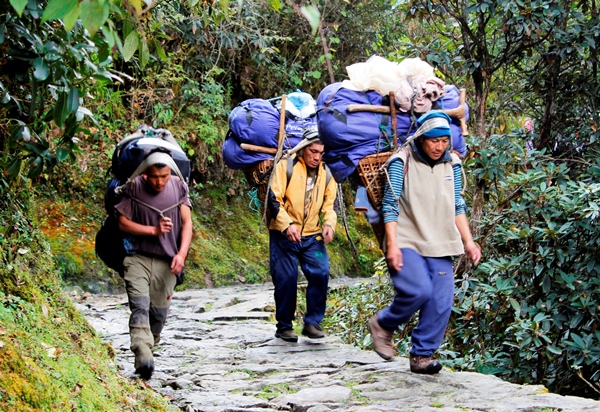
While you can hike in the Himalayas or the Grand Canyon independently, you must have a guide to hike the Inca Trail. If I had a good amount of trekking experience and was traveling with another experienced trekker, I would probably feel okay doing the Grand Canyon without a guide, but I would definitely hire one in the Himalayas. Sure, it’s easy enough to figure out the path, but it was incredibly helpful to have a local guide who helped us secure rooms at the tea houses each day, told us stories about the mountains and interpreted for us as necessary. I also think a guide is useful from a safety perspective in the Himalayas, especially when altitude sickness can be a significant risk.
With respect to porters, without a porter or animal (i.e., a yak or mule) carrying your gear, you must carry your own. In Peru and Nepal, I only carried a day pack with a rain poncho, camera, water and snacks. In Peru, we had to put the rest of our gear into a company-provided duffel that was limited to exactly 6 pounds – and they were very strict on that! In Nepal, my main pack, a 65 liter Eagle Creek pack, was stuffed to the gills and weighed around 15 pounds, although they were not nearly as strict about that as they were in Peru.
In the Grand Canyon, I had to carry all of my own gear (although other treks in the canyon do allow for mules to carry trekkers’ gear) and I was initially very apprehensive about it. My pack probably weighed around 25-30 pounds, which included my clothes, sleeping bag, sleeping pad and a lightweight single person tent. It ended up not being so bad and gave me confidence that I could carry my own gear on a trek in the future if necessary.

Scenery
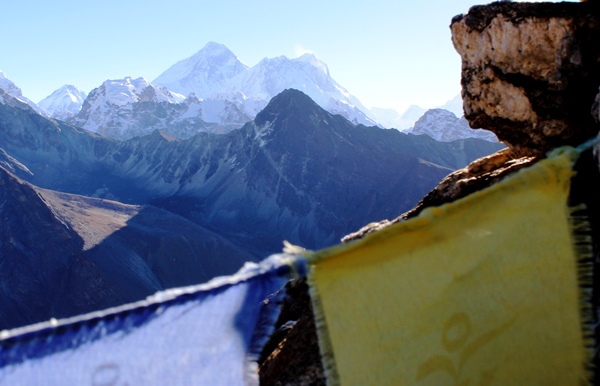
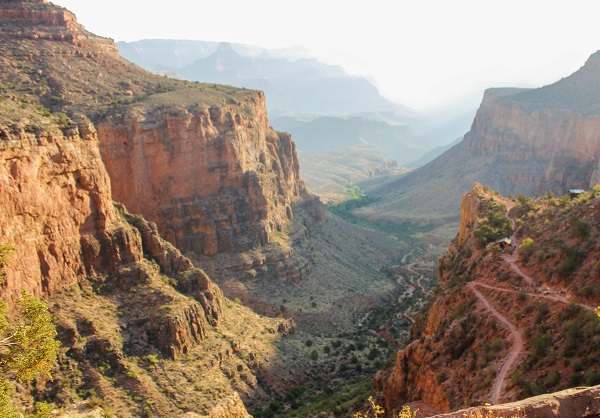
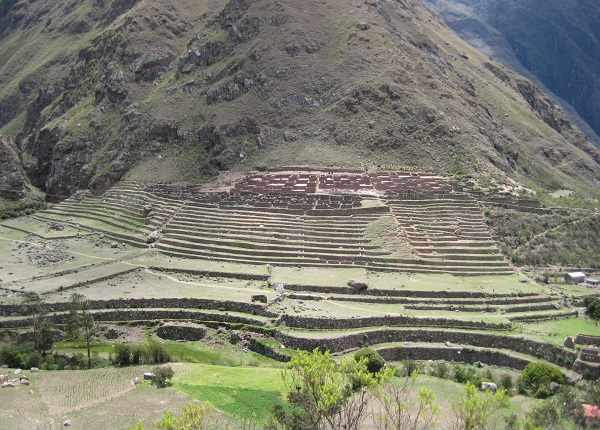
These three hikes provide very different environments – and the scenery on each will vary depending on the time of year you go. I found the Inca Trail interesting because of the ruins we passed or stopped at along the way and the fact that we ended up at Machu Picchu. Due to a lot of rain and foggy skies while we were trekking, though, the scenery during the trek itself was not that memorable. In the Himalayas, I loved the prayer wheels, flags and mani stones that we passed throughout the trek and they were some of the most interesting things to photograph. While the mountains were certainly impressive, I didn’t feel like the view changed that much day to day. On the other hand, the view in the Grand Canyon changed throughout each day. As we descended from the north rim to the bottom of the canyon and back up to the south rim, we passed layers of sandstone, limestone and shale. The colors were incredible and everything was far more green than I had expected. It was by far my favorite trek.
Have you trekked the Inca Trail, Himalayas and/or Grand Canyon? Share your experience below!
